Perkbox, the global employee benefits and rewards platform used by more than 7,500 businesses to support four million employees worldwide, has offered gift cards through its platform for close to ten years. Over recent months, however, their use has grown significantly, increasing by 45% over the past 2 years.

Employees can access discounted e-gift cards through Perkbox’s wider perks offer, while employers can also provide points through the platform which employees can exchange for gift cards. This means gift cards can be used both as an everyday savings tool and as part of an employer’s reward and recognition offer.
Employees are also increasingly using gift cards as part of their regular spending, helping make their everyday money go a little further. That could mean putting a gift card towards the weekly shop, using one for coffee or lunch, or simply finding a way to make everyday purchases cost a little less. Across Perkbox’s wider perks and discounts, employees saved more than £27.7 million last year, showing the value workplace benefits can deliver when they are used regularly.
Separately, gift cards also play a role in reward and recognition. Employers can award points through Perkbox to recognise employees, which can then be exchanged for gift cards, giving people flexibility over how they use their reward.
Charlotte Atkinson, Head of Partnerships at Perkbox:
“Gift cards are a strong engagement tool for us because people already understand how to use them and can see the value straight away. They give employees a reason to come back to Perkbox regularly, and from there they’re also engaging with the wider benefits available to them.”
Helping employees get more from their benefits
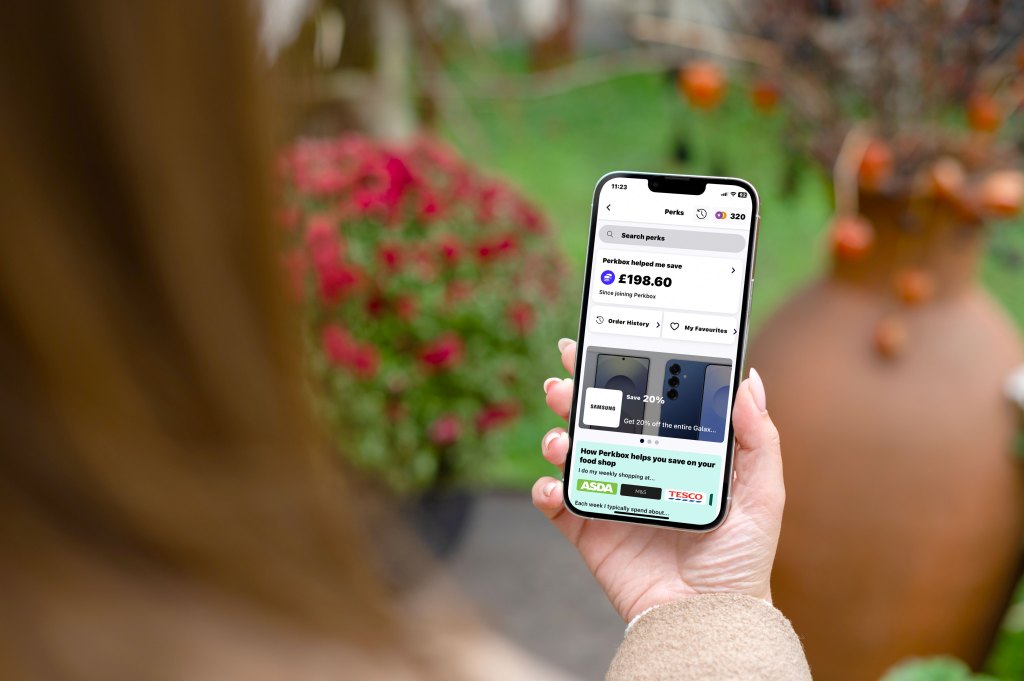
Gift cards sit within Perkbox’s wider employee benefits offer, alongside discounts and cashback designed to help employees save on their everyday spending. Employees can also see how much they have saved through the platform over time, making the value of their benefits more visible.
Alongside the discounted gift cards available through Perkbox, employers can use FlexiPerks to fund points that are added to employees’ wallets on a regular basis. Employees can then decide how to use those points, including exchanging them for gift cards.

Perkbox also offers reward points for more traditional occasions, such as birthdays, work anniversaries or to recognise a job well done.
The important part is that employees still have a choice. Someone might use their points towards their supermarket shop, while someone else might save them or spend on something completely different.
This gives employers a consistent way to provide value, while leaving employees to decide what will be most useful to them.
A more practical role for reward
Perkbox has also seen a change in the conversations employers are having about benefits.
With household costs still putting pressure on people’s budgets, there is more focus on what employers can offer beyond pay and how those benefits can make a genuine difference to people day-to-day.
Perkbox’s Science of Reward at Work research shows why getting this right is important. While 75% of employers believe their reward and recognition makes employees feel valued, only 53% of employees say the same. That gap suggests employers cannot assume that a reward will land in the way they intend it to.
The research, based on 4,000 UK employees and 1,000 UK employers, also found that 78% of employees are more motivated when recognition is combined with financial reward. For Perkbox, giving employees a choice over how they use that financial reward is one way of making it more relevant to the individual.
The same pattern is reflected across the wider gift card market. GCVA research found that 88% of employees who had received a £50 gift card said it had made a meaningful difference to their day-to-day life, whether that meant a treat, a shared experience or help with everyday costs.
In practice, that could mean using a gift card towards something bought every week, turning a workplace reward into a saving employees can feel in their day-to-day spending.
Keeping people engaged
Gift cards also help bring employees back to Perkbox.
The platform works with retailers on enhanced gift card offers at different points in the year, giving employees another reason to log in when they are already thinking about spending.
Perkbox sees this as an important part of engagement, giving employees another reason to return to the platform and explore the wider benefits available to them.
New clients are supported through a dedicated onboarding process, covering how the platform works and how employees can make the most of their benefits.
Used across a wide range of businesses
Perkbox is not seeing gift card use concentrated in any one type of organisation.
That is part of their appeal. Employers can offer the same benefit across a large and varied workforce, while employees still have the freedom to use it in a way that suits them.
Its clients with the highest levels of gift card use span a mix of sectors, including financial services and the public sector. There is no obvious pattern in terms of which industries use them most.
For Perkbox, that breadth of use suggests the appeal of gift cards is less about a particular type of organisation and more about giving employees flexibility over where they use them.
What’s next for gift cards?
Perkbox expects gift card use to continue growing, driven in part by convenience.
As gift card technology becomes more integrated with digital wallets such as Apple Wallet and Google Wallet, using them has the potential to become more seamless and closer to the way people already pay.
Behaviour is another factor, with employees paying more attention to where they can save money and how they can get the better value from their everyday spending.
For Perkbox, that has opened a wider role for gift cards within employee benefits. They are still useful for the big moments, but increasingly they are earning their place in the smaller, everyday ones too.
Hannah Shimko, Managing Director of GCVA:
“What we’re seeing through Perkbox is a good example of how the role of gift cards in reward is changing. A reward doesn’t have to sit separately from someone’s everyday life. When people can use that value on the things they already buy, from their weekly shop to lunch or a coffee, it becomes something much more tangible. That’s where gift cards can be particularly powerful: they turn recognition into value that fits naturally into how people live and spend.”